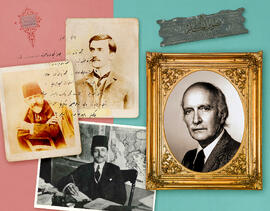
The Tercüman Newspaper Archive contains manuscripts (handwritten texts) from the Ottoman period and the early years of the Republic, including literary, historical, and mystical texts and works, as well as theater works, which have been transferred to Tercüman Newspaper Publications.
Literary works, poetry books, novels, essays, memoirs; historical documents, military histories, official documents (memoranda, dispatches, foundation and expense ledgers); Sufi works and texts focusing on topics such as wahdat al-wujud, tawhid, and stages of spiritual development; and works on Ottoman and early Turkish theater form the core content of the collection.
In addition, the archive also contains notebooks containing works and correspondence written in the handwriting of well-known figures in society. One of the most prominent sections of the collection consists of personal notebooks and letters belonging to the Sabri Kalkandelen family.
Some of these handwritten notebooks have been published, some have been published but are rare copies, and some have never been published.
Ebüzziya Family Papers begin with journalist, printer, and politician Ebüzziya Mehmed Tevfik (01.01.1719) and conclude with his grandson Ziyad Ebüzziya (17.03.1992). Covering a period of approximately 130 years and three generations, the collection provides significant documentation on the late Ottoman Empire and the early Republican period.
The fonds consist of papers belonging to Ebüzziya Mehmed Tevfik, his sons Talha and Velid Ebüzziya, and his grandson Ziyad Ebüzziya. Among the documents are family correspondence; letters exchanged with prominent intellectuals of the late Ottoman period such as Ali Suâvi, Server İskit, Yunus Nadi, and Recâizâde Mahmud Ekrem; articles published in the Tasvîr-i Efkâr newspaper; several works printed at the Matbaa-yı Ebüzziyâ press; and books with arabesque ornamentation.
The Republican-era documents include Ziyad Ebüzziya’s correspondence with leading contemporary figures, special collection calendars and postcard samples printed at the Ebüzziya Press, as well as other related materials.
In addition, the fond contains a rich variety of visual and textual materials such as photographs, engravings, maps, and newspaper clippings, shedding light on the intellectual and political life of the period.