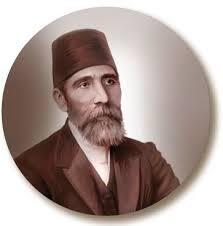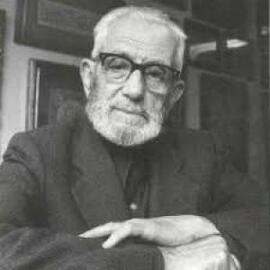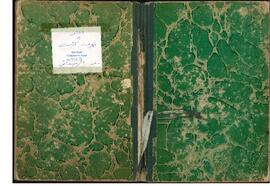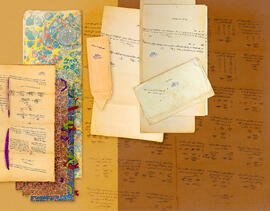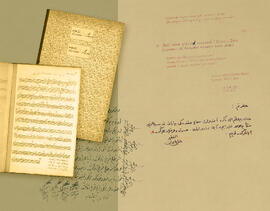
Dr. Bora Keskiner, who studies Ottoman art history and specializes in Islamic calligraphy, created this collection by gathering letters, manuscript notebooks and manuscript notes he obtained from various booksellers. The collection, which presents a portrait of the Mevlevi community in post-Republican Istanbul, is an important source in terms of showing how the Sufi environment in Ottoman society has gone into a transformation with the Republican period. In this respect, the collection is especially remarkable for research on the history of Sufism in the recent period.
The documents dated between 1927 and 2000 are organized in four folders and 124 files. The majority of the letters in the collection consist of correspondence sent to Mevlevi sheikh Sadık Kurç. While Sadık Kurç's correspondence with Halil Can constitutes the most comprehensive series of the collection, his correspondence with Mehmet Ceylan also occupies an important place. In addition, song sheet music notebooks by Bestenigâr Ziya Bey and Halil Can's handwritten texts are among the outstanding documents of the collection.

The archive, which is among the most important written sources of Turkish music today, contains nearly 83.000 pieces of sheet music, 182 manuscript notebooks and retail copies of sheet music, and 478 books and journals on Turkish music. The 7,428 works in 182 manuscript notebooks have been cataloged and opened for research.
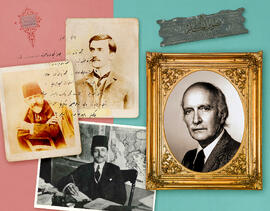
Cüneyd KosalEbüzziya Family Papers begin with journalist, printer, and politician Ebüzziya Mehmed Tevfik (01.01.1719) and conclude with his grandson Ziyad Ebüzziya (17.03.1992). Covering a period of approximately 130 years and three generations, the collection provides significant documentation on the late Ottoman Empire and the early Republican period.
The fonds consist of papers belonging to Ebüzziya Mehmed Tevfik, his sons Talha and Velid Ebüzziya, and his grandson Ziyad Ebüzziya. Among the documents are family correspondence; letters exchanged with prominent intellectuals of the late Ottoman period such as Ali Suâvi, Server İskit, Yunus Nadi, and Recâizâde Mahmud Ekrem; articles published in the Tasvîr-i Efkâr newspaper; several works printed at the Matbaa-yı Ebüzziyâ press; and books with arabesque ornamentation.
The Republican-era documents include Ziyad Ebüzziya’s correspondence with leading contemporary figures, special collection calendars and postcard samples printed at the Ebüzziya Press, as well as other related materials.
In addition, the fond contains a rich variety of visual and textual materials such as photographs, engravings, maps, and newspaper clippings, shedding light on the intellectual and political life of the period.
The collection of correspondence of Hüseyin Hilmi Pasha, who was the Grand Vizier at the time of the March 31st Incident, is an important source for researchers interested in late Ottoman history, the Committee of Union and Progress, the Balkans and Macedonia. Hüseyin Hilmi Pasha's official and personal correspondence is an important primary source for national and international political developments in the Balkans, especially during his Rumelia Inspectorate. The documents from this inspectorate period account for more than half of the collection.
Hüseyin Hilmi PaşaThe presence of Hamparsum sheet music and original sheet music in the collection written by Kemal Batanay (1893-1981), a composer of Turkish music and ta‘līḳ calligrapher, makes this archive valuable. The collection mostly consists of rare works written by musicians. Among the most prominent documents in the archive are 1,342 pieces of sheet music written in Kemal Batanay’s own handwriting, 789 printed and 860 photocopied sheet music, 55 original and photocopied notebooks, and 396 compilations. The collection, which covers the dates when the owner of the collection lived, is organized in 30 folders and 2,137 files.
UntitledMehmed Safayhi (1890-1977) served as a sorting officer at the Süleymaniye Library Directorate between 1937 and 1970. The 216 files of this collection are categorized under seven headings: bibliographic works, index and miscellaneous works, letters, family, professional documents, miscellaneous, poetry, prayers, and notes. The notebooks, which are available in full text, contain bibliographic information on hundreds of works. The alphabetically successive notebooks were prepared by Mehmed Safayhi during his tenure as a sorting officer at the Süleymaniye Library and can be used as a guide for cataloging manuscripts.
UntitledProf. Dr. Muḥammad b. Tāwīt al-Ṭanjī (1918-1974) was a Moroccan scholar of literature, fiqh, and history known for his scholarly publications. The collection includes works on history, literature, philosophy, hadith, astronomy, and many other subjects. The collection, which consists of notebooks, miscellaneous documents, and bibliographic fiches, is organized in three groups. Notebooks constitute a significant portion of the 550 documents. These notebooks, which largely contain academic notes, include bibliographical information, indexes, and various works, as well as research that al-Ṭanjī started but did not complete. The miscellaneous papers include 189 letters. The collection, which dates from 1814 to 1997, is classified in 96 folders and 768 files.
Muhammed b. Tavit et-TancîOrhan Şaik Gökyay (1902-1994) was a literary historian, language researcher, and important poet. The collection contains Gökyay’s personal documents (diplomas, identity cards, certificates of honor, and photographs), his correspondence with many individuals and institutions in Turkey and abroad, his published poems and essays about poetry, manuscript copies of all his works, various works in the fields of literature, history, and folklore, and documents related to the Turanism Trial. The collection features items dated from between 1940 and 1992 and is categorized in 106 folders and 2,069 files.
Orhan Şaik GökyayThese archival documents include expense ledgers, official correspondence, and various other documents related to the foundation established by Pertevniyal Valide Sultan and the income-generating properties (akarlar) affiliated with this foundation. Among the documents are lists of books donated by Valide Sultan, expenses related to candlesticks used in the Holy Mosque of Mecca, and information about the procurement of candles for these candlesticks. There are also ledgers showing the expenses incurred during the construction of the hospital she had built in Medina.
The archive also contains documents and correspondence related to the repairs and maintenance of various structures, as well as gifts made to state and foundation officials working under the foundation.
This fond contains documents reflecting Rıza Tevfik's world of thought, the political events of his time, intellectual movements, and his relations with his environment and the world. Covering the years 1856-1997, the collection is organized in 32 folders and 921 files. It contains 3,998 documents of 12,978 pages, including correspondence with important people and institutions in Turkey and around the world, as well as manuscripts, photographs and newspaper clippings. The fond, which sheds light on the last period of the Ottoman Empire and the early years of the Republic, is a valuable source for research on this period.
Rıza Tevfik Bölükbaşı