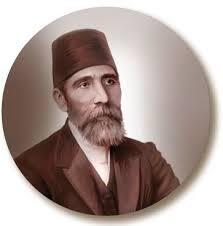
The collection of correspondence of Hüseyin Hilmi Pasha, who was the Grand Vizier at the time of the March 31st Incident, is an important source for researchers interested in late Ottoman history, the Committee of Union and Progress, the Balkans and Macedonia. Hüseyin Hilmi Pasha's official and personal correspondence is an important primary source for national and international political developments in the Balkans, especially during his Rumelia Inspectorate. The documents from this inspectorate period account for more than half of the collection.
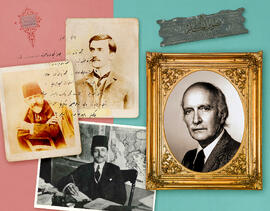
Hüseyin Hilmi PaşaEbüzziya Family Papers begin with journalist, printer, and politician Ebüzziya Mehmed Tevfik (01.01.1719) and conclude with his grandson Ziyad Ebüzziya (17.03.1992). Covering a period of approximately 130 years and three generations, the collection provides significant documentation on the late Ottoman Empire and the early Republican period.
The fonds consist of papers belonging to Ebüzziya Mehmed Tevfik, his sons Talha and Velid Ebüzziya, and his grandson Ziyad Ebüzziya. Among the documents are family correspondence; letters exchanged with prominent intellectuals of the late Ottoman period such as Ali Suâvi, Server İskit, Yunus Nadi, and Recâizâde Mahmud Ekrem; articles published in the Tasvîr-i Efkâr newspaper; several works printed at the Matbaa-yı Ebüzziyâ press; and books with arabesque ornamentation.
The Republican-era documents include Ziyad Ebüzziya’s correspondence with leading contemporary figures, special collection calendars and postcard samples printed at the Ebüzziya Press, as well as other related materials.
In addition, the fond contains a rich variety of visual and textual materials such as photographs, engravings, maps, and newspaper clippings, shedding light on the intellectual and political life of the period.
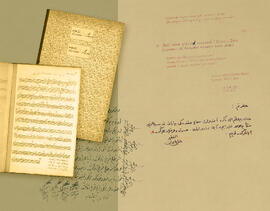
The archive, which is among the most important written sources of Turkish music today, contains nearly 83.000 pieces of sheet music, 182 manuscript notebooks and retail copies of sheet music, and 478 books and journals on Turkish music. The 7,428 works in 182 manuscript notebooks have been cataloged and opened for research.
Cüneyd KosalDr. Bora Keskiner, who studies Ottoman art history and specializes in Islamic calligraphy, created this collection by gathering letters, manuscript notebooks and manuscript notes he obtained from various booksellers. The collection, which presents a portrait of the Mevlevi community in post-Republican Istanbul, is an important source in terms of showing how the Sufi environment in Ottoman society has gone into a transformation with the Republican period. In this respect, the collection is especially remarkable for research on the history of Sufism in the recent period.
The documents dated between 1927 and 2000 are organized in four folders and 124 files. The majority of the letters in the collection consist of correspondence sent to Mevlevi sheikh Sadık Kurç. While Sadık Kurç's correspondence with Halil Can constitutes the most comprehensive series of the collection, his correspondence with Mehmet Ceylan also occupies an important place. In addition, song sheet music notebooks by Bestenigâr Ziya Bey and Halil Can's handwritten texts are among the outstanding documents of the collection.