

Identity area
Reference code
Title
Date(s)
- 01.05.1973 (Creation)
- 01.10.1937 (Creation)
Level of description
Extent and medium
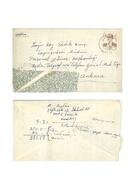
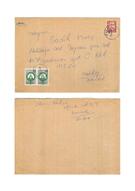
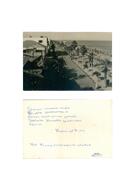
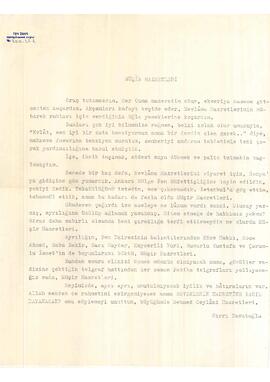
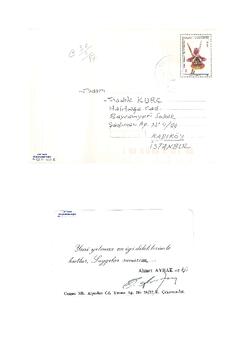
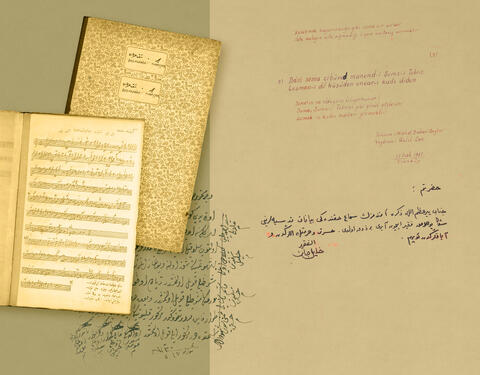
60 letters / 5 photographs / 40 drafts / 14 notebooks / 5 notebooks, 8 sheet music
Context area
Name of creator
Biographical history
Bora Keskiner was born in Munich in 1980.
He learned to read and write Ottoman Turkish from Nermin Suner. He studied calligraphy with Savaş Çevik. He studied Persian with Daryuş Kupal, Arabic with Numan Tütüncü, and Greek with Sultana Abacı. He graduated from Yıldız Technical University, Faculty of Art and Design in 2004.
During his university years, he studied Turkish music theory with Prof. Ruhi Ayangil.
In 2007, he completed his master's thesis titled “The Significance of Calligraphy on Mamluk Monuments” at the University of London - SOAS, Department of Islamic Art History.
In 2012, he earned his PhD at the University of London - SOAS with his thesis titled “Sultan Ahmed III as a Calligrapher and a Patron of Calligraphy,” written under the supervision of Prof. Doris Abouseif.
He has published books and articles in the field of Ottoman art history. Keskiner continues his work as an academic and expert in Islamic calligraphy.
Repository
Archival history
Dr. Bora Keskiner obtained various letters, manuscript notebooks and some manuscript notes from various booksellers and brought them together and this became a collection.
Immediate source of acquisition or transfer
Donation (09.03.2017)
Content and structure area
Scope and content
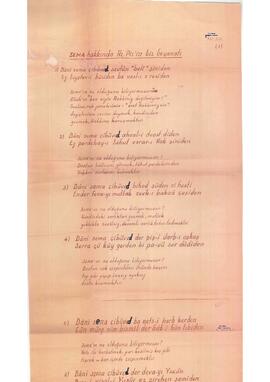
Dr. Bora Keskiner, who studies Ottoman art history and specializes in Islamic calligraphy, created this collection by gathering letters, manuscript notebooks and manuscript notes he obtained from various booksellers. The collection, which presents a portrait of the Mevlevi community in post-Republican Istanbul, is an important source in terms of showing how the Sufi environment in Ottoman society has gone into a transformation with the Republican period. In this respect, the collection is especially remarkable for research on the history of Sufism in the recent period.
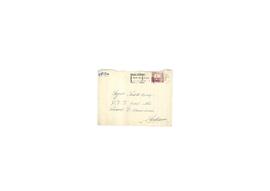
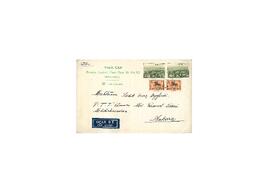
The documents dated between 1927 and 2000 are organized in four folders and 124 files. The majority of the letters in the collection consist of correspondence sent to Mevlevi sheikh Sadık Kurç. While Sadık Kurç's correspondence with Halil Can constitutes the most comprehensive series of the collection, his correspondence with Mehmet Ceylan also occupies an important place. In addition, song sheet music notebooks by Bestenigâr Ziya Bey and Halil Can's handwritten texts are among the outstanding documents of the collection.
Appraisal, destruction and scheduling
Since it is a historical document, it will be kept permanently.
Accruals
Open-end Fond
System of arrangement
It is divided into subseries and files based on the titles Sadık Kurç and Musiki.
Conditions of access and use area
Conditions governing access
The Catalog information and digital images of the documents are available online. The originals of the documents can be examined at our centre upon request.
Conditions governing reproduction
Copyright belongs to İSAM. It can be reproduced with the permission of the institution and quoted with reference.
Language of material
- Ottoman Turkish
- Turkish
Script of material
- Arabic
- Latin
Language and script notes
Physical characteristics and technical requirements
Finding aids
Apart from the database prepared by ISAM, there is no pre-prepared list, index or catalog.
Allied materials area
Existence and location of originals
The original documents are kept in the İSAM Library Archive (İKA) repository.
Existence and location of copies
Digital copies of the documents are kept on hard drives available at the İSAM Library Archive (İKA).
Related units of description
Notes area
Alternative identifier(s)
Access points
Subject access points
Place access points
Name access points
- Halil Can (Subject)
- Mehmed Ceylan (Subject)
- Sadık Kurç (Subject)
- Bestenigar Ziya Bey (Subject)
Description control area
Description identifier
Institution identifier
Rules and/or conventions used
Status
Level of detail
Dates of creation revision deletion
It was opened to researchers on May 26, 2021.
Language(s)
- Turkish
Script(s)
- Latin
Sources
Archivist's note
The classification of documents and their adaptation to the ISAD-G standard was carried out by Dr. Nuray Urkaç Güler, digitization by Volkan Kuru, and digital editing by Merve Altınbaş.